
As someone who has spent their life in glasses, LASIK, or laser eye surgery, is a procedure that I have looked into getting. The appeal of not having to wear glasses or wake up early to struggle with contacts is strong, but I am hesitant. According to the Mayo Clinic, the purpose of the procedure is to correct the shape of a patient’s cornea to improve how light hits the retina. While seemingly straightforward, LASIK can sometimes be a polarizing topic.
Recently, I came across a tweet praising the procedure as a triumph of modern technology that changed how they experience life. Immediately after seeing the initial tweet, a quote tweet about the horrors of the procedure began to pick up traction.
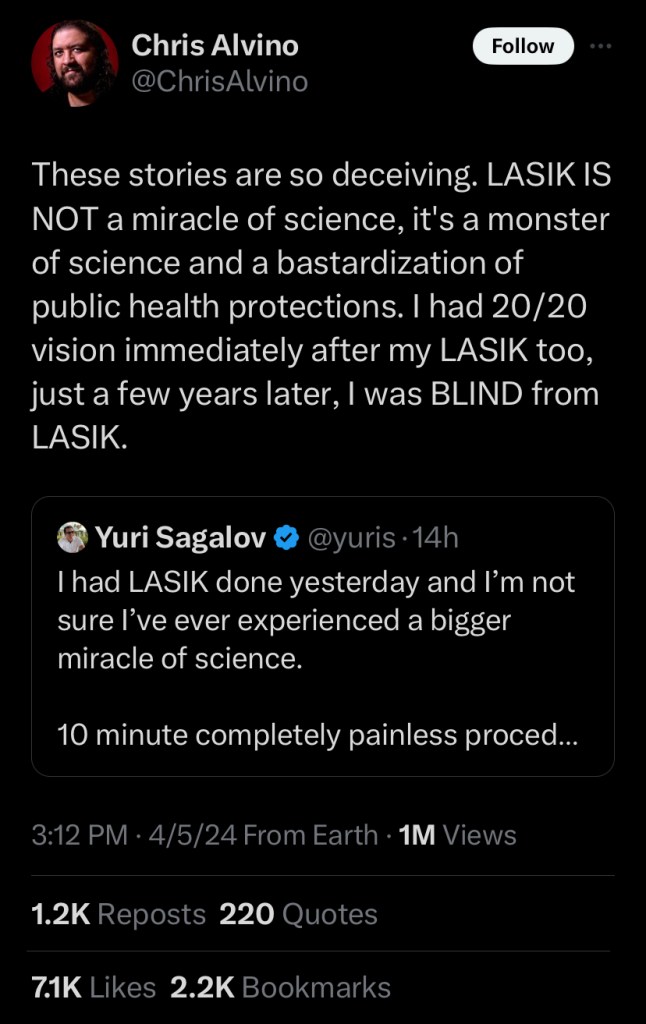
One claim states that LASIK is a modern technological accomplishment, thus making it a beneficial surgery. The other claim states this is not a revolutionary procedure but a failure and ethical concern. Both claims were so opposing, with considerable likes, comments, and retweets, that I want to investigate some of the data surrounding LASIK. I have also been interested in the surgery, as wearing glasses can be bothersome, and fumbling with contacts can take time. The idea of my vision becoming compromised is unsettling, so both claims are a little concerning. One praises the procedure, and the other is wholeheartedly against it; it is all tricky. I do not think LASIK is wholly horrible, as I know people in my life who have undergone surgery and love the results, but I do have concerns (as with anything).
Step One: Google
First, I want to get off Twitter. It’s a great app for personal experiences, but the goal is to find facts and professionals rather than individual stories. My search terms were biased, but I got fascinating results, mostly from eye surgery/care centers.
Step Two: NVISION
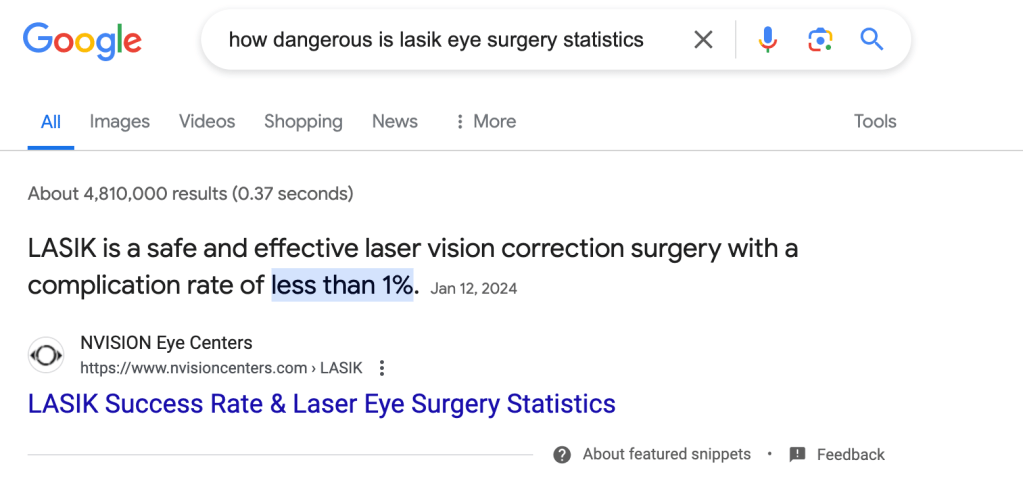
The first result was a snippet stating that the LASIK complication rate was “less than 1%” from NVISION Eye Centers. This website was stale and seemed to partner with vision centers nationwide, with information about surgeons and facilities in 50 states. Their section concerning the success of the surgery had links to peer-reviewed articles backing up their claims. Some of the sources felt unusual.

Step Three: Today Show
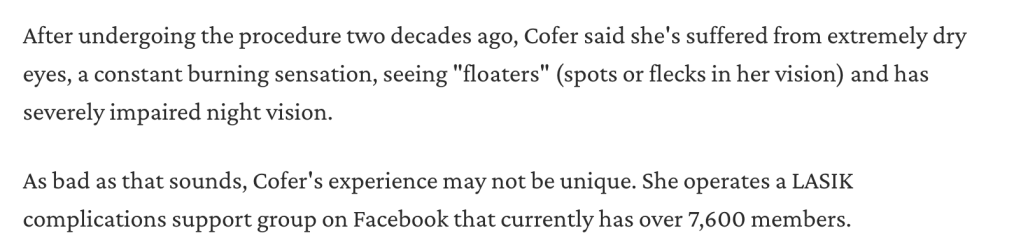
Scrolling further down, I found a Today Show article in which they interviewed experts about the dangers and risks of LASIK. This article was more skeptical, including links to the FDA and peer-reviewed findings. It is essential to note that the complications explored in this article include dry eye, irritation, and astigmatism rather than losing site.

The claim that LASIK is a safe procedure is reasonable for several reasons. According to NVISION, there is a less than 1% chance a “complication” will occur. What they mean when they say complication is unclear. Scrolling further, they also state the success rate of multiple studies, most hovering at 98% or higher on procedural stratification.

Because this was from a site selling LASIK, I wanted to investigate the links to the Today article further. More hesitant in opinion, this article also stated that LASIK can be a reasonable procedure, but the explanation of risks and patient communication needs improving. While people enjoyed their vision immediately after the surgery, a lot experienced severe dry eye and other complications. And some suffered severe difficulties.

Today’s article emphasizes the importance of speaking with a professional and confirming a patient’s candidacy. While this procedure can be effective and safe for some, there are threats. Medical advice is a touchy subject, which makes this claim difficult to prove. As I write this, I am sure there was a better claim, but here I am! LASIK can be a corrective and effective surgery for some, but risks are always present. The primary problem was revealed when viewing the website I visited and Today’s article. First, NVISION’s site wants you to get the surgery, so the data and studies are incredibly positive, while the risks are more vague, as seen in “complications.” Second, Today Show has a plethora of official organizations, including the FDA and doctors, who give testimony to their experiences, which vary. The most important lesson is to speak with a professional about your condition.
 Olivia FM
Leave a comment